
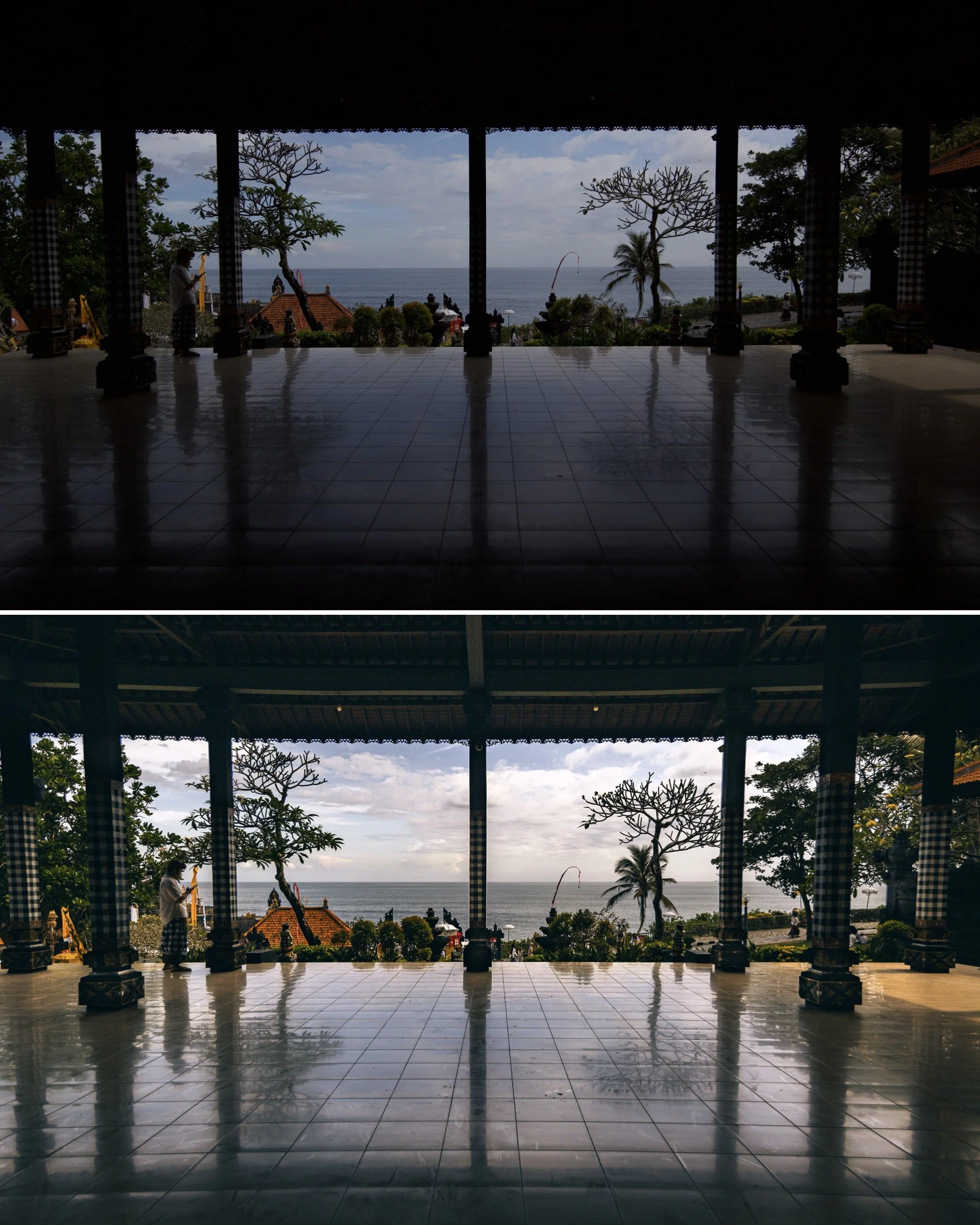
Before: ‘meh.’ After: ‘Yeah.’
Same photo, all I did was let the light in. Proof that exposure fixes more than mood.
If photography had one superpower, it would be light. Gear helps, sure, but light is what separates a “meh” photo from one that stops you mid scroll.
When you understand it, you stop chasing luck and start creating magic on purpose.
So let’s break it down.
1. Light Tells You What Kind of Photo You’re Taking
Light sets the tone before you even press the shutter. The same subject can look peaceful, intense, or mysterious just by how it’s lit.
Here’s how I think of it:
| Type of Light | Mood & Look | Best Use |
|---|---|---|
| Golden Hour | Warm, cinematic | Portraits, travel |
| Blue Hour | Cool, moody | Cars, reflections |
| Midday Sun | Harsh, bold | Street, metal |
| Artificial Light | Creative, edgy | Night portraits |
Make it Happen: Try shooting your car twice, once at midday and once at golden hour. You’ll see the difference instantly. The same car turns from “shiny” to “cinematic”
Pro move: When you arrive somewhere, stop and look first. Where’s the light coming from? How does it fall? Does it bounce off a surface? This is what great photographers do before even unpacking their gear.
2. Direction Changes Everything
The direction of light changes the personality of your photo, even when the subject doesn’t move.
| Direction | Look | Use it for |
|---|---|---|
| Front light | Clean, flat, even | Product shots, documentation |
| Side light | Textured, dramatic | Portraits, cars, architecture |
| Backlight | Silhouettes, glow, sep. | Lifestyle, travel, storytelling shots |
Make it Happen:
- At a car meet, try shooting the same car from different angles as the sun sets.
- Face the light → the car’s paint will pop but lose shadow definition.
- Move 90° → side light brings out curves and texture.
- Go behind the car → flare, atmosphere, and instant drama.
Tools to help:
Use your phone compass or Sun Seeker to find the light direction before you shoot.
Bring a small reflector or even a white T-shirt to bounce light if shadows get too deep.
3. Shadows Aren’t the Enemy
If light is the star, shadows are the supporting cast. They shape the story.
A photo without shadows looks flat, like soup without salt.
Make it happen:
- When shooting portraits, let half the face fall into shadow for mood.
- In car photography, use shadows to separate chrome from body panels.
- Street shots? Find patterned light, like sunlight through blinds or trees, and let it fall across your subject.
Try this exercise:
Find a strong light source (sun through a window, a lamp, or even a phone flashlight). Place an object near it and move it slowly. Watch how the shadow changes size and intensity. That’s how you start to see light instead of guessing it.
4. Train Your Eyes to Chase Light
Good photographers don’t wait for light; they hunt it.
Every day, look for reflections, streaks of sunlight, or glow on surfaces. Once you train your eye, even a boring street becomes a photo opportunity.
Make it happen:
- Take your phone.
- Pick one hour (any hour).
- Spend 15 minutes walking and shoot only light. No subjects, just where it lands.
- You’ll start noticing things like glass reflections, colour temperature, and movement in shadows.
Tip: When I’m out in Sydney, I’ll notice how the late afternoon light hits a parked bike and turns it into a cinematic shot, even before I pull out my Canon.
Useful tools:
Lightroom Mobile (to analyse lighting after shooting)
Snapseed (great for quick light balance tests)
Camera+ 2 (shows live exposure histograms on iPhone)
5. Use Tech, Not Luck
Guessing light is fine if you’re winging it. But pros plan it.
You don’t need to overcomplicate things, just use tools to predict and prep.
Apps I use and actually work:
Sun Seeker → Shows where the sun will rise, move, and set, even indoors.
PhotoPills → Absolute powerhouse for planning sun, moon, and Milky Way shots.
Weather AU → Basic but crucial. Clouds can turn harsh light into perfect diffused light.
Tip: Before a travel shoot or car session, I’ll open Sun Seeker to check when the light hits my location perfectly. That 10-minute window is often when you get the shot.
IMPORTANT!!
You don’t need to be a light expert; you just need to be aware.
Start watching how light behaves, what direction it comes from, and how it interacts with what you’re shooting.
Because once you start seeing light, you’ll never shoot the same way again.
So grab your camera (or even your phone), step outside, and play.
Try the exercises above, use the apps, and just experiment. You’ll start catching shots you used to walk right past.
Thanks for hanging out here!, now go and make something you’ll be proud of.
Much love and light.
– Kaz ✨
Let’s Grow, Frame by Frame
Good photography isn’t about owning the most expensive gear; it’s about knowing how to work with the light you’ve got.
📌 Next moves:
Get My Free Marketing Audit → Send your Instagram or website and get 3 clear fixes for your business within one working day. Free, no obligation.
Follow @kazvisuals.co → for real shooting examples.
Check the Gallery → Explore my curated highlights across Automotive, Travel, Lifestyle, Street & Culture, Branding, and Projects.
Light is your best teammate, learn its patterns, play with it, and you’ll never run out of ideas again.
Photography is a journey. One frame at a time, one story at a time, we get better, sharper, and more confident. I’ll keep sharing what I learn, so you can take it, try it, and grow your own vision.
Remember this: the best light isn’t just out there, it’s how you see it. And once you start seeing it right, everything changes.
This is where the next frame starts. Ready to chase the light?
